


Interview with Carme Trilla Bellart, president of the Habitat Fundation3
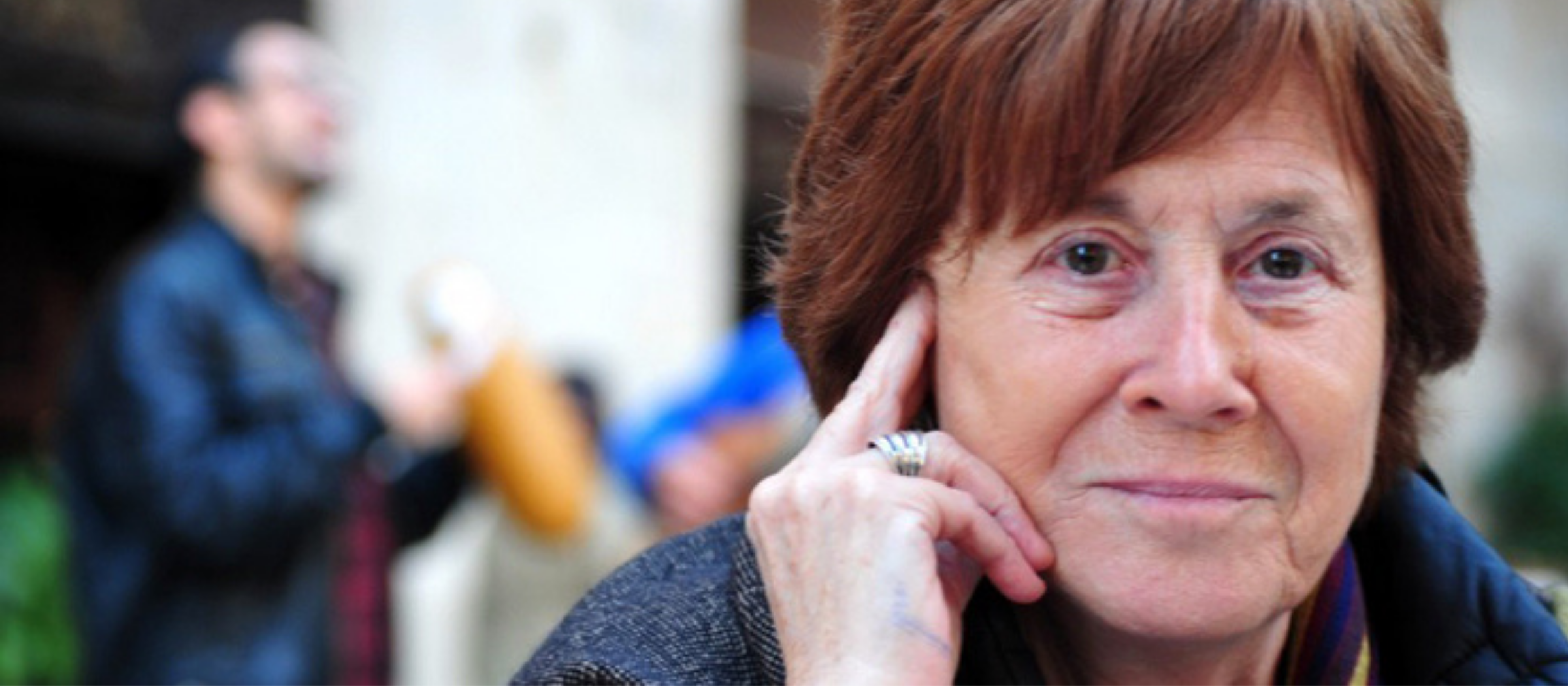
interviewed Carme Trilla, economist specializing in housing issues and housing policy. She served as Secretary of Housing of the Generalitat de Catalunya between 2004 and 2011. She is currently president of the Habitat3 Foundation, the third social sector, and the Metropolitan Observatory of
Housing in Barcelona.We have recently signed a collaboration agreement with Fundació Hàbitat3. You can consult it at this link
-2% of the housing stock in Catalonia is for social rent. The European average is 15%. How is this?
This is the result of divergent housing policies during the 20th century. In most European countries, after the Second World War, social rental housing policies were chosen that were permanent in time. In Catalonia and Spain, on the other hand, a path was basically followed of policies to promote purchase homes, of official protection yes but with an expiration date in the protection regime. We are talking about more than six million homes in Spain and more than one million in Catalonia. This has meant that, after twenty, thirty or forty years of protection, all these houses have entered the park and private market and are no longer performing a social function. If they had maintained their original protected status, i.e. transmission prices controlled by the public administration, we would now have a protected park of 37% of the total. It would be one of the most important in Europe
-Broadly speaking, at the housing level, what are we doing wrong in Catalonia and what should we do to improve?
We have started the 21st century with a minimal public park and practically no protected housing, which means starting from scratch to face a double problem. On the one hand, that of the difficulties of access to affordable housing for all those who have to emancipate or who have to change housing and who see prices totally removed from their income from the great price bubble of the period 1997-2007; and, on the other hand, the problem generated in the last stages of crisis, begun in 2008, of the terrible loss of housing in which the part of the population who cannot afford to pay for housing has been found - and is still finding themselves - because they have lost their job or a significant part of their income. The difficult and highly demanding challenge of the 21st century in terms of housing is, therefore, in Catalonia, to generate a sufficient and stable affordable park over time; that does not disappear. One part of this challenge needs urgent materialization to end emergencies and another must be systematically and permanently met, responding structurally to the new needs of the population
-In an interview with La Vanguardia, published in 2018, the headline was “Housing should be metropolitan, but mayors don't want it!” What was he referring to?
The metropolitan area is a de facto reality for the population of Barcelona in their search for residential solutions. In the private market there are no borders of mobility, many people, if they do not find the housing they want or that they can pay for in a specific municipality, do not encounter administrative obstacles to look for it in another municipality; but in the public or protected market this freedom does not exist, since the municipal policies of land and the offer of housing at a controlled price in -- and it is explainable that it is -- responding to the needs of its own residents and this generates barriers to entry for those who are not previously registered for public offers. It would therefore be necessary to move towards formulas that would introduce criteria for the award of protected or public housing more open than the current ones and this should be within a framework of metropolitan, urban and social concertation. A metropolitan housing plan, in accordance with the Sectoral Territorial Plan for Housing - which is in the phase of approval - should be the immediate and future framework.
What is it like to work in the third sector? What is the best? And the worst?
The work of the third sector is essential to respond to the specific needs of the most vulnerable groups in society. The third sector in some cases complements the activity of the public sector and, in many others, performs functions that the administration does not address due to management difficulties or even legislative limitations. Particularly interesting is the structure and the powerful network of cooperation that the third sector has in Catalonia, which is clearly recognized in the rest of Spain. Public administrations count on it and an important synergy work takes place. In the field of housing, the role of the third sector is very incipient in our country and is being inspired by the great experience of most European countries. To make progress in this area, it will be necessary for the public sector to understand the enormous management costs that social entities have and include them in a reasonable and sufficient way in public budgets to make social projects economically viable
-From Hàbitat3 you manage the Empty Flats program... is it the same as the Housing Rental Exchange of the Barcelona City Council? Do you need rehabilitation companies to make reforms?
The Rental Exchange's empty flats program puts landlords and tenants in a relationship while offering guarantees of public mediation in the event of a dispute in exchange for a rent slightly lower than the market average. The rehabilitation works must be carried out by the owner and can count on a significant public subsidy. Tenants must pay the price agreed with the landlord. They are homes, therefore, aimed at families with the ability to pay a reasonable rent.
The empty flats programme managed by the Habitat Foundation3, on the other hand, offers full guarantees to the owners of empty flats or those who need rehabilitation works to do these works, pay them the rent agreed and recover the house in perfect condition, in exchange for the homes being destined for vulnerable people in an emergency situation. In this program, the contract of transfer of the apartment is signed between the owner and Habitat3 and the end users of the housing also sign the rental contract with us. In this way, it is Hàbitat3 that assumes all the responsibilities of rent management and incidents, with a technical and social team that monitors the tenants' homes. The rent is insured by the City Council which is the one who covers the difference between the part that tenants can pay and the rent agreed with the owner.
The projects of the rehabilitation works are prepared by the technicians of Habitat3 and are agreed with the owners and with the City Council. The financing is guaranteed by the City Council which is the one who advances the necessary funds to carry out the works. The recovery of the investment is made by the City Council deducting it from the rents that it will charge the owner, minus 20% that the City gives as a subsidy to lost funds. And the works are carried out by Habitat3 with employment insertion companies, to the extent that this is possible. Companies do not compete for each project since we have agreed on a closed project and cost system of works, which greatly speeds up the entire execution process.
— From the Guild we promote the CONSTA seal as a tool of the sector that certifies responsible companies and as a measure to fight against the submerged economy and bad practices.
Taking into account her past as Director General and Secretary of Housing of the Generalitat de Catalunya - and recalling that the National Housing Pact 2007-2016 included among its measures the commitment of the Generalitat de Catalunya to provide technical and economic support to the CONSTA Register “with the aim of giving the maximum guarantees of quality to consumers” (support included in article 52 of the Law 18/2007, of 28 September, on the right to housing) -, in this sense, what do you recommend us to move forward with the seal and against bad practices?
I still think that it is good that business activities have high levels of control to ensure transparency and security for customers and users. Both from a technical and economic point of view. This is what the CONSTA Register intended. We must think that for construction or rehabilitation projects, technical, economic, fiscal and financial knowledge is necessary, often far removed from the possibilities and capacity of consumers. Acts of faith in relation to the technical and budget proposals does not seem to be the recommended formula, but it is necessary to give the maximum security and guarantee on the part of the administration in relation to the solvency of the companies in these various areas
-Last question... in which city in the world or which neighborhood would you like to live just thinking about housing issues? Why?
Although I know what other European cities offer in terms of housing, I like to live in Barcelona and, specifically in the Gràcia neighborhood, because it is where I have always lived and I have established the closest family relationships. I like city life because it ensures and facilitates access to all kinds of services, because it offers access to culture and because it is a source of social wealth and coexistence. Like the vast majority of Barcelonians, logically, I need to leave the city from time to time to make contact with nature and with very different life realities. Luckily I can do it and I can combine the two experiences. One of the values of Barcelona is the high level of social cohesion that it had achieved during the 20th century and that has begun to be altered since the crisis of 2008, due to the very strong impact of evictions and the poor accommodation of many people who cannot afford the cost of housing. The objective of restoring cohesion, bridging inequalities and guaranteeing the effective right to housing, should be one of the great milestones as a city in order to be a benchmark for coexistence.