


Summary of the RiME conference of 19/10/2023
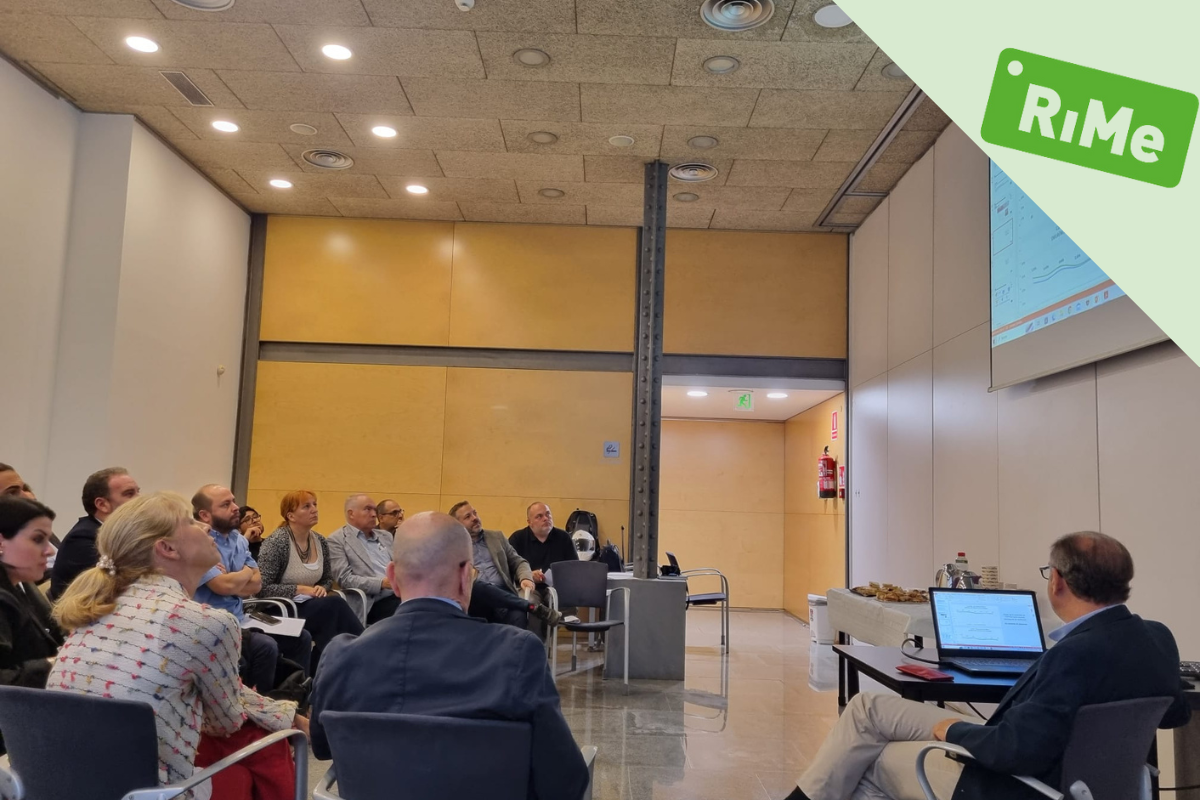
Theme of the session: Programa Construendo Empleo: Connecting professionals and companies. /Strategies and tools for decision-making in the energy rehabilitation of homes. Simulate the behavior of buildings.
The new conference of the Commission for the Rehabilitation and Maintenance of Buildings (RiME), held last Thursday, October 19, 2023 at the Guild headquarters, was dedicated to strategies and tools for decision-making in the energy rehabilitation of homes.
The conference was attended by the technical director of the Institute of Construction Technology of Catalonia (iTEC), Ferran Bermejo Nualart and the secretary of the Laboral de la Construcción de Catalunya Foundation and manager of the Guild, Mercè Polo.
First part: Introduction and welcome. Strategies and tools for decision-making in the energy rehabilitation of homes. Simulation of the behavior of buildings.
As a presentation and welcome to the debate, Josep Antoni Martínez Zaplana, president of the Guild and RiME, recalled that these RiME sessions are organized so that the rehabilitation companies of the Guild and representatives of other actors in the activity can debate current issues and seek consensus to solve problems specific to the sector.
Zaplana then explained that this day, like the last sessions held, is in continuity with the issues related to the Next Generation fund and subsidies for the sustainability and energy efficiency of buildings. One of the objectives of these grants, stressed Martínez, is the recovery of the economy in the wake of the 2020 pandemic, and therefore a community of owners who rehabilitate their building not only contributes to rehabilitating their facade and/or housing but also contributes to improving the economy of their local area or
terri At theend of this introduction, Martínez gave the floor to Ferran Bermejo, technical director of ITEC who opened his presentation addressing the room to explain that “the effort to rehabilitate must be multiplied tenfold in order to reach the 2030 and 2050 commitments proposed by Europe”. This, he went on to say, poses the great challenge of how to mobilize the entire sector to “broaden communication, make things easy at all levels to be able to reach the goal.” With this intention, ITEC and with the collaboration of the Housing Agency, the Barcelona College of Technical Architecture (CATEB) and the Association of Architects of Catalonia (COAC) developed a tool aimed at facilitating the pre-dimensioning of the main rehabilitation parameters, compliance with which can give access to obtaining subsidies for the campaigns that have been put in place launched within the framework of the Next Generation funds. It should be borne in mind, however, that this is not an energy certification tool nor is it intended to replace them in the process of drafting projects or certification after the execution of a work. This tool, however, is based on the UNE-EN-ISO 52016-1:2017 which ensures a close relationship with the values of the certification.
Tool to support the pre-dimensioning of energy rehabilitation of residential buildings (ESPREH): https://itec.cat/programes/espreh/
During his speech, Bermejo recalled that it is necessary to keep in mind the fundamental basic conditions to access these subsidies, the basis of which specifies that buildings must meet two requirements: the reduction of demand and the reduction of consumption.
Bermejo also pointed out an “issue that escapes the Royal Decree” and is the priority in the execution of interventions: when carrying out the energy rehabilitation of a building and improving its energy efficiency, several actions are carried out that sometimes do not involve cost and that due to this go unnoticed and the value or importance that they may have is not transmitted to when it comes to improving the energy efficiency of a home. A logical order to follow, indicated Bermejo,
can be:- Control: make good use of the means of control that we have in the building (for example, the thermostat).
- Hiring: change energy supplier at home, price comparison, etc.
- Passive measures.
- Active measures.
These last 3 points would make a single block where work is intervened so that the technicians with the design and project study achieve the best energy saving solution for that building and that cover the conditions of the subsidies. As a final point
,6. Maintenance of the facilities is necessary so that over the years they continue to operate with the same expectations with which they were
installed.Finally, Ferran Bermejo made some recommendations reviewing what was commented during his speech: analyze each case, highlight the role of technicians in the definition of the action and its formal design, plan based on priority of action and schedule them, be clear that beyond the works there are actions of almost zero cost and that the established system by RD, tries to encourage beyond the minimum limits: “if we have achieved the energy minimums that are being asked of us in the volume of the work we want to do, we can add works that they do not have an energy purpose [...], as long as the granted part [of the subsidized energy minimums] is complied with. '
—Presentation link for this part of the day
Part 2: Programa Construendo Empleo: Connecting professionals and companies.
After this first part of the meeting, time was left to answer the questions and resolve doubts of those present during the intervention of the Technical Director of the ITEC, and then the president of the RiME Commission and the Guild, Josep Antoni Martínez, gave the floor to Mercè Polo, secretary of the Laboral de la Construcción Foundation of Catalonia and manager of the Guild of Builders.
www.construyendoempleo.com and its mobile version (APP), the development of a communication and dissemination campaign in which the Guild is also involved. At this point, Mercè Polo gave a short explanation of the operation of the website and the app, the functions that we can find and the utilities we can give them
Third part: Closing of the session and Networking
Finally, RiME thanked the speakers for their participation in the session and invited the rest of the attendees to resolve any issues that had arisen during the presentations.
Once the doubts were resolved, the president of the Guild, Josep Antoni Martínez, encouraged the attendees to enjoy the breakfast prepared for this occasion, also inviting them to take advantage of this moment of relaxation to establish a small networking and share interests of the sector.