


The Advisory Council of Infrastructures of Catalonia promotes the rehabilitation of homes
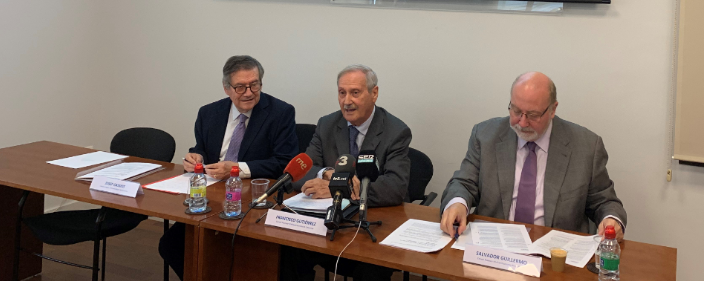
On November 7, the Advisory Council for Infrastructure of Catalonia presented a report advocating measures to bet decisively on the rehabilitation of homes to improve the quality of life of citizens and boost a sector that generates jobs and social, economic and environmental benefits
DOWNLOAD FULL REPORT “HOUSING REHABILITATION: A SECTOR WITH GREAT POTENTIAL TO DEVELOP”
- Public investment in Spain in housing and community services rose from 0.4% of GDP to 0.1% in the period 2007-2017.
- It is also necessary to design long-term public and private financing packages and, in addition, to sign voluntary agreements with energy trading companies or other mechanisms available to finance energy rehabilitation.
- Continue and intensify information campaigns aimed at citizens

The Advisory Council for Infrastructure of Catalonia publishes its fifth report.
“The rehabilitation of houses: a sector with great potential to develop” proposes the main axes in order to promote the rehabilitation of buildings so that it is comparable with that of other countries in our environment. It is the fifth report presented by the Advisory Council since its constitution in 2017. It is made up of fourteen independent experts of recognized prestige, experience and proven professional trajectory from various technical specialties in the infrastructure sector, both in the private and public sectors. The founding members of the Advisory Board are the Catalan Association of Engineering Companies and Independent Consultants of Catalonia (ASINCA), the Chamber of Works Contractors of Catalonia (CCOC), Foment del Treball Nacional (FTN) and the Foundation Cercle d'Infraestructures (FCI). The Chamber of Concessionaires and Companies linked to the Public Sector in the field of Infrastructure, Equipment and Public Services (CCIES), the College of Engineers of Roads, Canals and Ports of Catalonia, the Catalan Construction Confederation (CCC) and the Institute of Construction Technology of Catalonia (ITEC) also collaborate
The president of the Infrastructure Advisory Council, Francisco Gutiérrez, recalled that the rehabilitation of houses has not yet reached a volume of activity equivalent to that of the countries around us, with greater awareness of the importance of rehabilitation and more resources to carry it out.
This document analyzes the issue and proposes measures that can help improve the quality of life of citizens and energize a sector such as rehabilitation, which generates jobs and social, economic and environmental benefits that contribute to achieving the Sustainable Development Goals (SDGs) of the United Nations.
Rehabilitation plays an important role in our society because it improves living conditions for all, increases the affordable rental housing stock in the face of the lack of available land, promotes energy saving and renewable energies, encourages local economic activity linked to the sector and guarantees the quality and safety of the architectural heritage.
In addition, rehabilitation can be a valuable instrument to revitalize degraded and impoverished areas of cities in economic, social and cultural aspects. Therefore, it is necessary to build a vision of the city and to have economic resources and long-term programs that are inclusive, shared and beneficial for the community
.The right of ownership of properties whose main use is residential also entails duties, such as the obligation to conserve and rehabilitate, so that they are always in conditions of effective and adequate use. At the same time, the right to housing also entails obligations for public administrations, in accordance with the constitutional mandate to have decent and adequate housing. Thus, the promotion of the conservation, rehabilitation and major rehabilitation of residential real estate must be the subject of priority action by the Generalitat and local authorities to guarantee the right to decent and adequate housing.
It is estimated that in Spain the stock of homes that are subject to major rehabilitation is less than 1%, while in France or Germany, for example, it is above 1.5%. Likewise, public investment in Spain in housing and community services rose from a total of 4,788 million euros in 2007 to 986 million euros in 2017, from 0.4% of GDP to 0.1%, a drastic reduction that has greatly limited the effectiveness of public rehabilitation policies
.In our country, historically, new work has had a preponderance over rehabilitation, although this difference has been mitigated in recent years. The urban heritage and culture focused on urban development by colonization of new land still has specific weight and hinders the planning and management of deep building rehabilitation operations. However, in recent years the regulations have been modified, but the process is slow, lacks systematicity and there are still decisive issues for the development of rehabilitation that have not yet been dealt with
.Despite the benefits that rehabilitation brings to society and the legal obligations that sustain it, rehabilitation in our country, as we have said, has not been able to fully develop its full potential to respond to the rehabilitation needs of our housing stock. Noteworthy are the deficiencies in accessibility, which affect 16% of the Catalan park and those linked to the state of conservation, in 8% of its park; both figures above the national average values. Regarding the social consideration of energy efficiency, 33% of Spaniards show little or no satisfaction with the insulation against the cold and heat of their home, which indicates a greater concern about thermal comfort than about the state of conservation
.Buildings consume 30% of total energy, corresponding to 18% in the residential sector. Energy rehabilitation, while improving comfort and health, is an opportunity to reduce the energy bill, contribute to energy independence, free up economic resources for other activities, reduce greenhouse gas emissions and create additional employment.
Several factors may explain why the rehabilitation of buildings has not been able to unfold its full potential. Society does not value rehabilitation because it is not sufficiently aware of the health effects of unhealthiness and poor housing conditions, nor of the advantages it entails, especially with regard to energy rehabilitation; nor is there a culture of maintenance and preventive conservation of common elements. In addition, incentives of all kinds (economic, fiscal and regulatory) have oriented economic activity towards new work, as has already been said. On the other hand, rehabilitation tends to be a more technical activity than new, more labor-intensive work, in which many unknowns arise due to the lack of detailed information about the built park. In addition, interventions are carried out in urbanized places, with little space available to work and store and with neighbors around, which makes the activity very difficult.
But the main barrier preventing an adequate development of the housing rehabilitation industry, which boosts the sector, creates new markets and generates economies of scale, comes from the financing of the activity.
Despite all the studies, analyses and proposals that have been presented in recent years by administrations, organizations, entities and collectives, credit for rehabilitation remains scarce and expensive, despite the abundance of existing capital on the market, which could consider investing in it if certain conditions of guarantee of collection are given that do not exist. in the present.
Onthe other hand, public financing policies are outdated due to the lack of a coherent and systematic design that takes into account other social policies; they involve a lot of bureaucratic burden; they are totally insufficient in terms of the amounts subsidized and their scope and unpredictable in terms of their granting and, often, they are untimely. And all this is a consequence of an inadequate public policy on housing, which has not been a
priority for most administrations.The proposal of the Advisory Council for Infrastructure of Catalonia
The Infrastructure Advisory Council of Catalonia is firmly committed to housing rehabilitation to improve the quality of life of citizens and boost a sector that generates jobs and social, economic and environmental benefits. Despite the benefits it brings to society, there are all kinds of legal and, especially, financial barriers that prevent rehabilitation from unfolding its full potential. To improve current policies, it proposes:
01
Give greater coherence to the regulatory framework for rehabilitation, in a systematic way and in a short period of time, reinforcing inter-administrative coordination and collaboration and the simplification and homogenization of administrative procedures (one-stop shop). And establish a technical committee that interprets the application of technical and administrative regulations to specific cases of rehabilitation applying performance criteria vs. new construction regulations.
02
Carry out consensual planning, both politically, territorially and socially, and long-term based on objective data from improved statistical sources. The action plans must detail the financing, which must be realistic and sustainable, in the medium
03
Encourage:
a) The specialization in rehabilitation and energy efficiency of the agents involved (technicians, managers and builders), since each action is unique and requires expertise.
b) The creation of multidisciplinary management teams that diagnose the situations, manage and carry out the projects, integrating the different aspects (safety, health, accessibility and energy efficiency), with special attention to estates with high complexity that require the training of specialized managers.
c) The professionalization of the sector, forcing the identification of the agents involved in it in order to obtain the traceability of the actions, with the aim of protecting the rights of citizens and supporting the fight against the submerged economy.
04
Design long-term public and private financing packages for housing rehabilitation aimed at homeowner communities that integrate public aid with European Funds, grants from other administrations, credits from the European Investment Bank and a liquidity fund managed by the ICO or by financial institutions, with ICO endorsement, facilitating access to specialists in the retail
05
In addition, owners' communities or sole proprietors sign voluntary agreements with energy trading companies to finance energy rehabilitation or with EuropeACe-type platforms. The principal of the loan would be returned in the long term on each consumer bill with the help of the energy savings achieved or with the existing tax collection mechanisms. Such agreements should be compatible with all kinds of public aid and tax incentives.
06
Modify the VAT regulation applied to rehabilitation and energy efficiency to overcome the current indefinition
07
Promote the development of tax incentives for rehabilitation (among others, rehabilitation VAT, personal income tax, IBI, waste rate, tax rebate on loans, reduction of municipal fees for rehabilitation works licenses, Corporation Tax) and define the tax regime of owner communities.
08
Continue and intensify information campaigns aimed at citizens, explaining the mandatory nature of rehabilitation, as well as the benefits and opportunities it offers, emphasizing safety, comfort and health effects.
Appearance of the report in the media:
RTVE
http://www.rtve.es/alacarta/videos/linformatiu/informatiu-3-minuts-07112019/5437280/ (Min. 13.25)
TV3
https://www.ccma.cat/tv3/alacarta/telenoticies-migdia/telenoticies-migdia-07112019/video/5954585/ (41 minutes)
THE NEWSPAPER
https://www.vilaweb.cat/noticies/el-consell-assessor-dinfraestructures-reclama-impulsar-la-rehabilitacio-a-traves-de-plans-coordinats-i-mes-financament/
EUROPAPRESS
https://www.larepublica.cat/minut-a-minut/el-consell-assessor-dinfraestructures-reclama-impulsar-la-rehabilitacio-a-traves-de-plans-coordinats-i-mes-financament/
THE NATIONAL